
AI in Digital Marketing
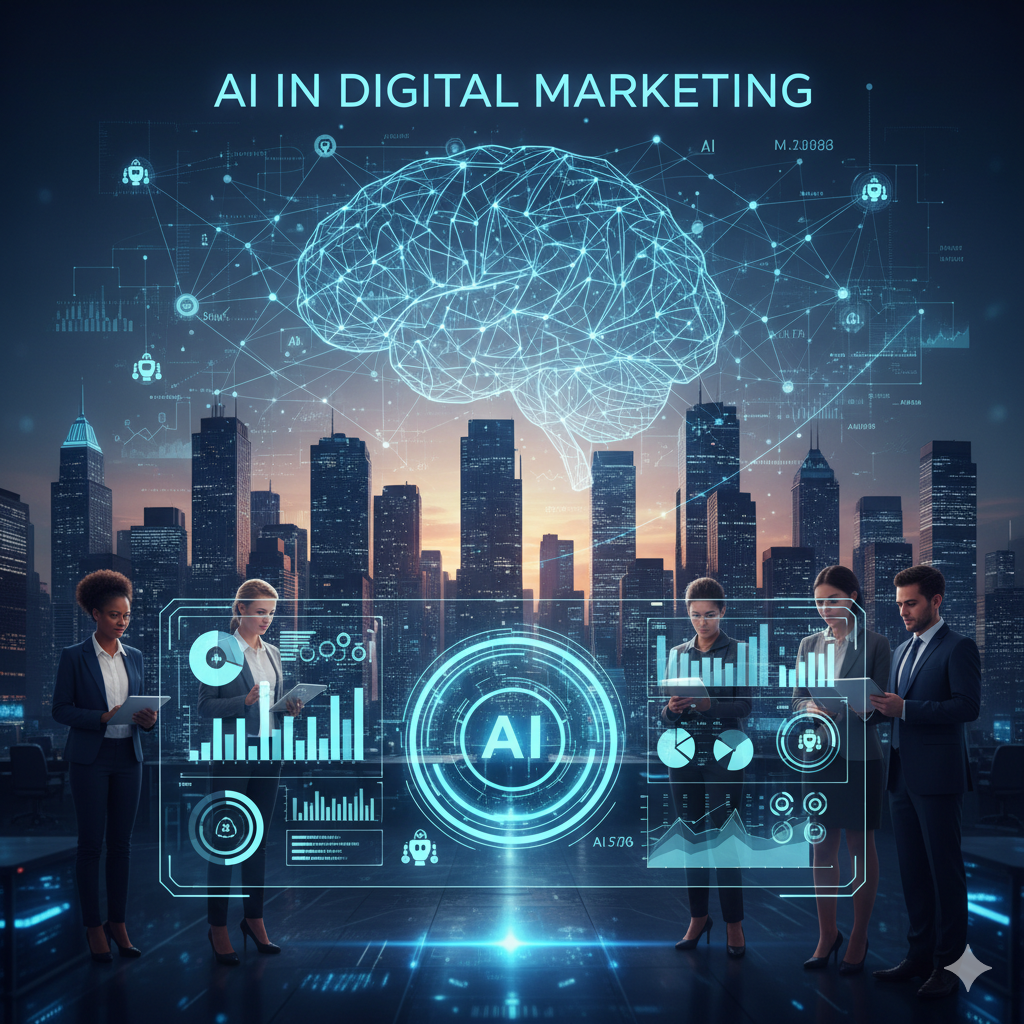
One of the most significant advantages of AI in digital marketing is personalization. Today’s consumers expect brands to know their preferences and provide relevant recommendations. AI allows for hyper-personalization by analyzing customer data such as browsing history, purchase behavior, demographics, and online interactions.
For instance, Netflix uses AI algorithms to suggest shows and movies based on viewing patterns, while Amazon recommends products tailored to each customer. This kind of personalization not only improves user satisfaction but also raises conversion rates and brand loyalty. AI tools like Dynamic Yield, Adobe Sensei, and Salesforce Einstein help marketers create dynamic content that changes automatically based on user behavior in real-time.
In email marketing, AI can determine the best time to send emails, select subject lines that are more likely to be opened, and tailor messages for each subscriber. Likewise, AI-powered websites can adjust content layout, product recommendations, and visuals depending on who is visiting.
AI in Content Creation and Optimization
Content has always been the backbone of digital marketing, and AI is changing how content is created and shared. AI tools like Jasper, Copy.ai, and ChatGPT can quickly generate blog posts, social media captions, product descriptions, and ad copy. These AI content generators analyze trends, tone, and keywords to produce optimized content that fits brand voice and SEO criteria.
Besides content creation, AI plays a significant role in optimization. AI-based SEO tools like Clearscope, Surfer SEO, and MarketMuse examine the top-ranking pages for given keywords and suggest improvements for better visibility. AI can identify gaps in keyword targeting, propose relevant topics, and even forecast future trends.AI-driven tools also aid in creating visual content. Platforms like Canva and Adobe Firefly use AI to design visuals, select color schemes, and suggest layouts based on industry standards. Video marketing benefits too, as tools can now automatically edit videos, generate captions, and even produce realistic voiceovers.
AI in Advertising
AI has transformed online advertising, making it smarter, quicker, and more effective. Through programmatic advertising, AI automates ad buying and placement in real-time, targeting the right audience at the right time with the right message. Instead of depending on manual bidding and placement, programmatic advertising platforms like Google Ads and Meta Ads use AI to find the best ad placements based on user data and behavior patterns.
AI also improves ad performance optimization. By analyzing large datasets, AI can find which ad creatives perform best, what kinds of headlines attract more clicks, and which demographics engage the most. Marketers can use this information to adjust campaigns dynamically, ensuring better ROI and reduced ad spend waste.
Additionally, AI contributes to predictive advertising, where algorithms forecast what users are likely to buy next. For example, if a user frequently searches for fitness equipment, AI can predict interest in related products like supplements or sportswear, allowing marketers to send personalized ads proactively.
AI in Social Media Marketing
Social media platforms generate vast amounts of data every day, and AI helps marketers make sense of it. Social listening tools powered by AI, such as Brandwatch and Hootsuite Insights, analyze conversations across social networks to find brand mentions, audience sentiment, and emerging trends.AI can detect customer emotions and reactions to products or campaigns, helping marketers tailor their responses. Chatbots on Facebook Messenger and Instagram use AI to engage
AI can detect customer emotions and reactions to products or campaigns,
Moreover, AI algorithms on social media platforms decide what content users see. For example, the Instagram Explore page, TikTok’s “For You” feed, and YouTube’s recommended videos rely on AI models that analyze user interactions to deliver personalized content. For marketers, grasping these algorithms helps them optimize their content strategy for better reach and engagement.
AI-Powered Chatbots and Customer Experience
Customer experience is one of the most significant areas where AI has made an impact. AI-powered chatbots have become common on websites, social media pages, and apps. These chatbots can handle multiple customer inquiries at once, providing 24/7 support without human help.
Chatbots like Drift, Intercom, and ManyChat utilize Natural Language Processing (NLP) to understand customer queries and respond smartly. They can assist with product searches, order tracking, complaint management, and even upselling products based on user data.AI not only improves efficiency but also enhances personalization. Advanced chatbots remember user preferences and past interactions, offering a seamless, tailored experience. This builds trust and encourages repeat purchases. Studies show that businesses using AI chatbots save both time and money while boosting customer satisfaction rates.
AI and Voice Search Optimization
With the rise of smart speakers like Amazon Alexa, Google Assistant, and Apple Siri, voice search has become a new area for digital marketing. AI powers these voice assistants, understanding and processing human language through Natural Language Processing (NLP).
Voice search optimization needs a different approach from traditional SEO. Marketers must focus on conversational keywords, question-based queries, and featured snippets. AI helps analyze voice search data to understand how people phrase spoken searches differently than typed ones.
By integrating AI insights, businesses can develop more voice-friendly content and ensure their websites are optimized for voice results. This shift is essential as more consumers use voice commands to find information, make purchases, and interact with brands.
AI and Marketing Automation
Marketing automation is one of the most practical uses of AI. Tools like HubSpot, ActiveCampaign, and Marketo automate repetitive tasks such as sending emails, scheduling social media posts, and segmenting audiences. AI enhances automation by adding intelligence; it can predict the best times to send messages, personalize content for each user, and score leads based on behavior.
Lead scoring powered by AI helps sales teams focus on prospects most likely to convert. AI systems continually learn from customer interactions, refining scoring models over time. This level of automation not only boosts efficiency but also ensures marketing efforts are targeted and effective.
Ethical Challenges and Limitations of AI in Marketing
While AI offers substantial benefits, it also raises challenges and ethical concerns. Privacy is one of the main issues. AI systems rely heavily on user data, raising questions about how data is gathered, stored, and used. Regulations like GDPR and India’s Digital Personal Data Protection Act have made it critical for marketers to handle data responsibly.Another concern is algorithmic bias. If AI systems learn from biased data, they may make unfair decisions, resulting in discrimination or misrepresentation in advertising. Transparency in how AI tools function is vital to maintaining consumer trust.
Finally, there is the question of human creativity. While AI can generate content and automate tasks, it lacks the emotional intelligence and storytelling abilities that make marketing truly impactful. Therefore, the best approach combines AI’s analytical power with human creativity and empathy.
The Future of AI in Digital Marketing
The future of AI in digital marketing looks very promising. As technology advances, AI will continue to improve personalization, predictive analytics, and customer engagement. New technologies like augmented reality (AR), virtual reality (VR), and generative AI will create even more immersive and interactive marketing experiences.
Another concern is algorithmic bias. If AI systems learn from biased data, they may make unfair decisions, resulting in discrimination or misrepresentation in advertising. Transparency in how AI tools function is vital to maintaining consumer trust Finally, there is the question of human creativity. While AI can generate content and automate tasks, it lacks the emotional intelligence and storytelling abilities that make marketing truly impactful. Therefore, the best approach combines AI’s analytical power with human creativity and empathy.
insights into consumer psychology and behavior. Businesses that embrace AI early and use it responsibly will have a strong competitive edge in the digital landscape.
Conclusion
AI has become a driving force behind digital marketing innovation. It has changed how brands interact with customers, create content, run ads, and measure success. By using AI, marketers can make better decisions, deliver personalized experiences, and increase efficiency. However, it is equally important to use AI responsibly, maintaining transparency and respecting consumer privacy.
Ultimately, AI doesn’t replace marketers; it empowers them. It allows them to focus on creativity and strategy while machines handle data and automation. The integration of human intelligence with artificial intelligence defines the future of marketing—one that is personalized, predictive, and deeply connected to customer needs.